Finding the real person behind a digital profile has become a significant challenge for everyday internet users. Whether you are navigating the modern dating scene, buying items on online marketplaces, or trying to avoid sophisticated phishing setups, verifying someone’s identity is no longer just a task for professional investigators. FaceCheck ID has recently gained attention as a powerful facial recognition search tool that claims to help users find where a face appears online. It is often used for scam detection, online identity checks, and open source intelligence style investigations.
When a public website claims it can scan millions of web pages to map out a person’s digital presence using just a single photo, it sounds both incredibly useful and slightly alarming. The utility of this software lies in its specialized index, which reaches into regions of the web that standard search engines like Google or Bing typically block or omit.
But with this capability comes an important question that every everyday web user must consider before uploading personal files to a random server. Is FaceCheck ID actually accurate, and is it safe to use? This review explains what FaceCheck ID is, how it works, its real-world accuracy, privacy concerns, pros and cons, and whether it is worth using based on practical analysis.
What Is FaceCheck ID?
FaceCheck ID is a facial recognition search engine designed to find online appearances of a person based on an uploaded photo. It functions as an open source intelligence asset accessible to regular consumers, designed specifically to trace visual data footprints across public web ecosystems.
Unlike traditional reverse image search platforms that scan basic file structures or image colors, this software analyzes the physical properties of a face. It is engineered to uncover instances where an image has been repurposed across multiple platforms under different names or entirely different contexts.
Instead of searching keywords or metadata like traditional search engines, it works by analyzing facial features and comparing them to a large database of indexed images from across the internet. The backend repository consists of billions of indexed images pulled from public blogs, social media platforms, news articles, and corporate directories.
Crucially, its web crawler also indexes public records that traditional consumer engines avoid. This includes local police mugshot databases, international most wanted galleries, and public sex offender registries.
In simple terms, it helps you answer a single foundational question. Where else does this face appear online?
How FaceCheck ID Works
The software bypasses traditional file metadata, meaning that changing a file name or stripping out exchangeable image file format data will not trick the search engine. FaceCheck ID uses AI-based facial recognition technology built on deep learning models.
The underlying pipeline runs through a series of direct programmatic steps during each query.
Face Detection
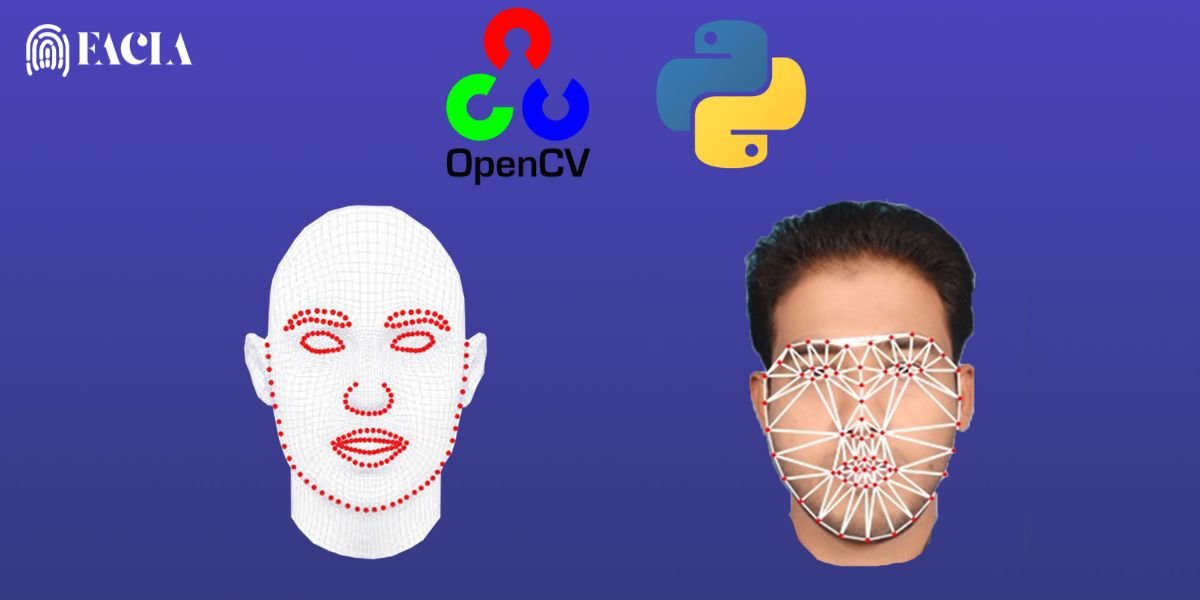
The system first isolates the face in the uploaded image. It strips away background scenery, clothing details, and peripheral objects to ensure the machine learning algorithm focuses purely on the target subject’s facial features.
Feature Mapping
It converts facial features into a mathematical representation called a face embedding. The neural network measures the distance between the eyes, the structural contour of the jawline, the width of the nose, and the relative symmetry of the cheekbones. This spatial architecture forms a unique vector fingerprint that remains relatively stable despite lighting adjustments or aging.
Database Comparison
That embedding is compared with millions of stored face embeddings collected from publicly available websites. The algorithm scans its massive vector dataset to find mathematical signatures that closely align with the coordinates extracted from the uploaded photo.
Match Scoring
The system returns results ranked by similarity score, showing possible matches. Users receive direct links to the web pages where the matching faces reside, alongside a confidence scale from 0 to 100 indicating the probability of a geometric match.
An important note must be emphasized regarding the output of this technical framework. It does NOT identify a person with certainty. It only finds probable matches based on visual similarity. The tool points to locations where a matching face exists, leaving the final analysis and verification to the human operator.
Accuracy of FaceCheck ID
The operational performance of any facial recognition engine is directly tied to the mathematical clarity of the input data. FaceCheck ID does not deliver uniform results across all search attempts, as its accuracy depends heavily on image quality and data availability.
The machine learning models achieve their highest performance benchmarks under optimal environmental conditions.
- The subject is captured in a clear front-facing photo facing the camera directly.
- The file features good lighting that highlights facial symmetry without casting deep shadows.
- The upload is a clear image that preserves micro features like skin texture and eye structure.
- The picture contains no filters, heavy compression, or heavy editing that distorts the underlying facial structure.
Conversely, the facial mapping algorithm struggles to generate reliable vector outputs when processing compromised visual files.
- The target is positioned in side profiles or angled faces that conceal core spatial landmarks.
- The search relies on low-quality screenshots, blurred phone camera footage, or heavily pixelated images.
- The face is partially covered by external obstructions such as medical masks, heavy sunglasses, or long hair.
- The file has been altered by heavily filtered social media images or face-modifying applications.
Independent reviews and real-world testing reveal consistent operational trends regarding its output.
The system demonstrates moderate to high accuracy for clear images, frequently surfacing obscure profiles that traditional engines miss entirely. However, there are noticeable false positives in ambiguous cases where the input photo lacks structural definition. In these scenarios, the software may display individuals who share similar bone structures but are entirely unrelated.
Furthermore, the overall performance depends on how widely the face exists online. If an individual maintains no public digital footprint, the tool will return zero results or surface irrelevant partial matches.
The key takeaway is clear. FaceCheck ID is good at finding leads, but not reliable enough for absolute identity confirmation. It serves as an initial investigative pointer rather than a definitive legal or forensic proof.
Is FaceCheck ID Safe?
Evaluating the safety of a public facial recognition tool requires analyzing more than just malware risks. Safety depends on two major dimensions: privacy and misuse risk.
1. Privacy Concerns
One of the biggest criticisms of FaceCheck ID is biometric indexing. The platform crawls public web spaces to copy images and map individual facial structures without the explicit knowledge or consent of the subjects.
- It analyzes facial structure from publicly available images across international jurisdictions.
- Users of those images may not have explicitly consented to facial recognition scanning when uploading photos to their personal spaces.
- Even publicly posted photos can be reused in unexpected ways by external search engines once indexed.
This raises significant ethical concerns around biometric data usage without consent. While the platform allows individuals to submit opt-out deletion requests to remove their faces from the index, the initial collection occurs automatically. On the data retention side, FaceCheck ID states that it deletes uploaded search photos within 24 hours, meaning your uploaded query image is not permanently added to their public database.
2. Risk of Misuse
Because the tool can connect faces across completely unrelated websites, it can be exploited by bad actors if used maliciously. The accessibility of the platform creates risks that do not exist with closed, enterprise-only biometric systems.
- Stalking or tracking individuals across obscure blogs, personal portfolios, and social accounts.
- Harassment or doxxing by connecting an anonymous profile to a real name or personal directory.
- Misidentifying innocent people due to false positives generated by low-quality or ambiguous images.
- Making false accusations based on incorrect matches in sensitive situations.
3. Data Reliability Risk
Another issue is that results are only as good as the indexed database. The software relies entirely on what its web scrapers find, leading to structural gaps in the displayed information.
- Outdated images may appear from years prior, failing to reflect an individual’s current appearance or life status.
- Duplicate or fake profiles may be included in the search results, validating a scammer’s secondary account instead of isolating the real person.
- Some real profiles may not be indexed at all due to privacy firewalls or platform restrictions on specific social networks.
The platform relies on a credit-based system where searches cost 3 credits each. While basic searches are available with limited or blurred previews, unlocking full source links requires purchasing packages like Just a Peek for 36 credits at $6, Rookie Sleuth at $19, or Private Eye at $49.
The transaction architecture heavily relies on cryptocurrencies like Bitcoin, Litecoin, and Monero to maintain financial anonymity for the searcher. This layer adds a degree of operational safety for regular consumers trying to check a scammer safely, but it also shields malicious actors from easy tracking.
The overall safety conclusion is straightforward. FaceCheck ID is not dangerous by itself, but it can become risky depending on how it is used. It functions as a neutral tool that requires strict user ethics to prevent personal or digital harm.
Pros of FaceCheck ID
Analyzing the operational strengths of the platform highlights why it has become a popular choice within the digital safety community.
- Strong reverse face search capability that uncovers matches that standard platforms like Google Images cannot detect.
- Highly useful for scam detection by instantly identifying reused images across fake dating profiles, commerce portals, and fraudulent investment sites.
- Delivers fast results, processing complex facial vector queries and generating categorized links within seconds.
- An exceptionally user-friendly tool that provides regular individuals with an entry point for tracking digital data trails.
- Features a simple interface that requires no technical programming knowledge or database experience to execute a search.
Cons of FaceCheck ID
Despite its investigative utility, the platform carries distinct technical and ethical drawbacks that users must understand before spending money on credits.
- It is not 100% accurate, meaning false positives can occur when the algorithm processes similar-looking faces or low-resolution files.
- Severe privacy concerns persist due to mass biometric scanning without clear user consent, drawing constant criticism from digital rights advocates.
- Possesses limited verification capability, meaning the tool should never be used as a definitive source for official identity verification.
- Suffers from a heavy database dependency; if a target individual does not have a wide, public online presence, the results will be limited, incorrect, or completely blank.
- Carries a constant risk of misinterpretation, as inexperienced users may assume a visual match equals absolute identity, leading to flawed conclusions.
When Should You Use FaceCheck ID?
To ensure maximum utility while operating within safe, ethical boundaries, users must clearly distinguish between appropriate and inappropriate deployment scenarios.
The application serves as a highly effective resource when applied to specific personal and everyday verification workflows.
- Checking suspicious online profiles to ensure an inbound online marketplace seller or professional contact is a real person.
- Investigating possible catfishing cases by verifying if a dating match is using stolen or repurposed photography.
- Finding duplicate or reused images of your own face to monitor for identity theft or unauthorized brand usage.
- Conducting basic open source intelligence research to verify open web sources or public figures during investigations.
Conversely, the platform must never be introduced into workflows governed by formal, legal, or institutional regulatory frameworks.
- Executing legal identity verification that requires government-issued credentials or official documentation.
- Making employment hiring decisions, as using unverified biometric data, violates standard labor and fair background screening laws.
- Processing banking or financial verification checks that require regulated, enterprise-grade verification networks with built-in compliance protocols.
- Making personal or professional accusations against individuals without secondary, non-biometric physical evidence.
FaceCheck ID vs Traditional Image Search
Understanding where this platform fits in the current software market requires a direct comparison with traditional, metadata-driven search applications.
| Feature | FaceCheck ID | Google Images |
| Face Recognition | Yes, utilizes dedicated deep learning facial mapping | Limited, relies primarily on surrounding text and metadata |
| Reverse Image Search | Advanced facial matching based on bone structure | General image matching based on shapes and color arrays |
| Accuracy for Faces | Medium to High, optimized for structural variations | Low to Medium, easily tricked by minor image edits |
| Privacy Concerns | Higher, due to unconsented biometric indexing | Lower, indexes broad web pages without mapping anatomy |
| Use Case | Scam detection, dating verification, and specialized lookups | General web search, asset sourcing, and basic lookups |
Are There FaceCheck ID Service Providers?
FaceCheck ID is primarily a single platform service, not a decentralized network of providers. The platform operates as a proprietary application managed by an anonymous development group, meaning you cannot source legitimate white-label installations or authorized secondary providers of this exact engine.
However, several similar tools operate in the same category, offering alternative entry points for facial recognition and open source intelligence tracking.
PimEyes
PimEyes stands as one of the most direct alternatives in the facial recognition search engine space. It operates on a premium subscription model rather than a per-search credit tier, providing deep, continuous monitoring tools that alert users whenever their face appears on newly indexed web pages.
Social Catfish
Social Catfish functions as a broader reverse search utility tailored specifically for consumer safety and relationship verification. Unlike pure biometric scanners, it combines facial recognition with email, phone number, name, and username database lookups to uncover fraudulent online profiles.
FaceOnLive
FaceOnLive operates as an alternative face search tool that caters to rapid, on-the-go checks. It is highly optimized for mobile devices and provides an entry point for quick identity validation across open social networks without the need for intensive database management systems.
These alternatives are not providers of FaceCheck ID, but alternative services in the same domain. Each engine relies on its own proprietary web crawler, meaning a photo that yields zero results on one tool might uncover a match on another, depending on how its respective indices are populated.
Final Verdict
FaceCheck ID is a powerful but imperfect facial recognition search tool. It represents a significant technological leap past traditional image matching, giving everyday consumers access to deep online verification capabilities that were previously restricted to specialized organizations.
The operational core of the platform delivers clear strengths for individuals looking to uncover romance scams, expose fake business profiles, or run basic digital safety checks. When provided with high-resolution, front-facing inputs, the underlying neural network excels at isolating matches across obscure corners of the web.
However, users must remain constantly aware of its technical and ethical limitations. The presence of false positives, the ethical complexity of biometric scanning without explicit consent, and the absolute lack of official verification capabilities mean the tool cannot be relied upon blindly.
If you view FaceCheck ID as an initial pointer that generates safety leads rather than an absolute source of truth, it stands as a highly effective defense tool against modern digital deception.