The Problem With How We Verify Identity Today
The current digital identity model is fundamentally broken and acts as a gold mine for cybercriminals. Every time you sign up for a service, you leave a digital footprint in a centralized database you do not control.
The 2026 RSA ID IQ Report found that identity-related breaches surged by 69% for global organizations in the last year alone. This creates a massive security risk where a single leak can expose your social security number, credit history, and personal details.
We currently rely on Siloed Identity. This is where companies like Google or Facebook act as gatekeepers to our digital lives. You do not own your identity. You are merely renting it from a provider that can revoke your access at any time.
Also, this centralized structure forces you to overshare sensitive data just to prove simple facts. It is an outdated system that values corporate convenience over individual privacy and security.
What Is Decentralized Identity?
At its core, what is decentralized identity is a framework that allows you to own and manage your digital persona without any central authority. It shifts the power from big tech companies back to the individual. Instead of a single server holding your data, you use a decentralized digital identity that lives in your personal digital wallet. You decide who sees your information and how much they see.
This model uses a combination of cryptographic keys and distributed ledgers to ensure your identity is tamper-proof and portable. You no longer need to create a new username and password for every site you visit. Instead, you carry your verified credentials with you. This is much like a physical leather wallet but with far superior digital security and privacy protections.
Decentralized Identity vs Centralized Identity
The difference between these two systems is like comparing a master key held by a landlord to a private key held only by you. In a centralized system, the organization owns the source of truth and can see everything you do.
In a decentralized identity management system, there is no central honey pot of data for hackers to target. This drastically reduces the risk of large-scale identity theft.
| Feature | Centralized Identity | Decentralized Identity |
| Control | Owned by the Service Provider | Owned by the Individual (User) |
| Storage | Centralized Databases (High Risk) | Distributed or Local (High Security) |
| Data Sharing | All-or-nothing (Oversharing) | Selective Disclosure (Privacy) |
| Portability | Locked to one platform | Moves with the user across Web3 |
Where Self-Sovereign Identity (SSI) Fits In
Self-Sovereign Identity, or SSI, is the ultimate goal of the decentralized movement. It is the philosophy that you should have complete autonomy over your digital existence.
Under SSI, your decentralized identity did (Decentralized Identifier) is not just a login. It is a permanent, globally unique address that belongs only to you. No government or corporation can take it away or change the data linked to it without your cryptographic consent.
How Decentralized Identity Actually Works
To understand the mechanics, we must look at how various technologies work together to create trust without a middleman. The system relies on open standards like the W3C decentralized identifiers and Verifiable Credentials. These allow different platforms to talk to each other securely. It is not just about moving data. It is about proving the data is authentic without revealing the underlying sensitive information.
Decentralized Identifiers (DIDs)
A decentralized identifier is a new type of ID that is globally unique and resolvable via a blockchain or peer-to-peer network. Unlike an email address or a phone number, a decentralized id is not issued by a provider. You generate it yourself using a private key.
The W3C DID v1.1 standards, published in March 2026, confirm that these identifiers allow you to prove ownership of your digital assets without a central registry.
Verifiable Credentials
Think of Verifiable Credentials as the digital version of your physical driver’s license or passport. They are digitally signed by a trusted issuer, such as a university or a government agency.
Because they are cryptographically secured, a verifier can instantly check their validity. This makes decentralized identity solutions incredibly efficient for everything from job applications to age verification at a digital storefront.
Issuers, Holders, and Verifiers
The decentralized ecosystem operates through a Trust Triangle involving three key players:
- Issuers: Organizations like a bank or university that sign a credential and give it to you.
- Holders: You, the user, who keeps these credentials in a secure mobile wallet.
- Verifiers: The entity, such as a landlord or employer, that needs to see proof of your claims.
Where Blockchain Fits — and Where It Doesn’t
While many people associate this tech with decentralized identity blockchain, the ledger is rarely used to store your actual personal data. Storing private info on a public blockchain would be a privacy disaster.
Instead, the blockchain acts as a public key infrastructure. It stores the DID document which contains public keys. Your actual name and address stay in your wallet, not on the chain.
Identity Wallets and Storage
Your identity wallet is the heart of your decentralized digital identity. It is a secure application on your phone or computer that holds your private keys and credentials. These wallets use Selective Disclosure.
This allows you to prove you are over 21 without revealing your exact birth date. It minimizes your data exposure and ensures that even if a verifier is hacked, they do not have a copy of your documents.
A Simple Walkthrough of Decentralized Identity Verification
Understanding what is decentralized identity is requires looking at the actual user journey. It is far simpler than the underlying math suggests. The process removes the need for manual entries and physical scans. Instead, it uses a seamless exchange of digital proofs you control through a mobile app.
Creating an Identity
Your journey begins by generating a unique decentralized identifier within a digital wallet. You do not provide an email or password to a central server. The wallet creates a pair of cryptographic keys. The private key stays on your device.
The public key forms part of your decentralized identity did. This identifier acts as your permanent digital address. It is registered on a ledger to ensure it is globally unique and resolvable.
Receiving Verifiable Credentials
Once your ID is set up, you need claims from trusted groups to make it useful. You might request a digital diploma from your university. These entities act as issuers. They verify your data and send a signed verifiable credential to your wallet. This credential is now a permanent asset you own. The issuer cannot change or revoke it without following strict rules you can see.
Storing and Managing Identity Data
Safety is the priority in decentralized identity management. Your sensitive data like your birth date stays in your wallet. It is not on a public blockchain. The wallet app is your personal command center. You can see your credentials and manage your keys. You can also see a log of who requested your data. If you lose your phone, modern decentralized identity solutions use encrypted backups to restore access.
Verifying Identity Without Oversharing
The most powerful feature of this system is selective disclosure. When a service provider needs to check your age, they send a request to your wallet. Your wallet sends a simple yes or no regarding the age requirement. You prove you are over 21 without revealing your exact birth date or name. This minimizes data exposure. It effectively kills the risk of identity theft during the check.
How This Differs From Traditional and Federated Identity Systems
Traditional systems are siloed. Every company keeps its own copy of your data. This creates thousands of targets for hackers. Federated systems like Login with Google improved convenience but centralized power.
In 2026, research shows that 87% of consumers have left personal info exposed while using these logins. Decentralized identity breaks this cycle. It removes the middleman. No single entity can track your movement or sell your data.
Where Decentralized Identity Is Already Being Used
This technology has moved past the testing phase. It is now a critical part of global digital systems. By 2026, the global market for these tools has reached a valuation of $17.20 billion according to Fortune Business Insights (2026).
Financial Services and KYC
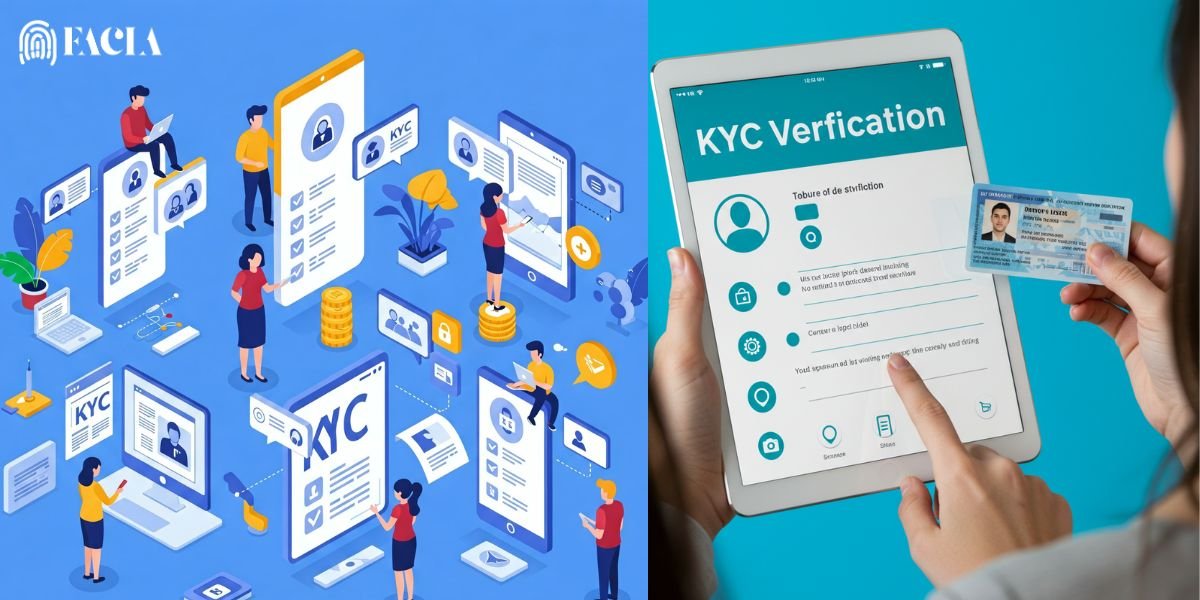
Banks use decentralized identity blockchain systems to improve the Know Your Customer process. You share a reusable KYC credential instead of submitting documents to every bank.
Mordor Intelligence (2026) reports that enterprises now issue reusable credentials that cut recurring verification costs by up to 60%. This saves money for banks and makes onboarding much faster for customers.
Healthcare and Patient Records
In the medical field, decentralized identity lets patients carry their own health records. You can grant temporary access to a specialist for one visit. Your data is not stuck in a hospital’s private database.
A 2026 study in the Journal of Medical Internet Research found that patients at a major German university hospital gave blockchain-based identity apps a high usability score of 77.34. It gives you total control over who sees your private medical records.
Government Digital Identity Programs
Governments are leading the charge in decentralized digital identity adoption. The European Digital Identity Wallet is a prime example. By December 2026, every EU member state must make at least one compliant wallet available.
This allows residents to store digital versions of their national IDs and driver’s licenses. They can share these across all 27 member states securely.
Web3 Authentication and Wallet-Based Identity
In the Web3 space, your decentralized id is your passport. You connect your wallet instead of connecting an email to an app. This enables passwordless logins. It ensures your reputation follows you across different networks. It prevents fake accounts by linking logins to a single, verified human identity.
Workforce and Credential Verification
Employers now use decentralized identity solutions to verify a candidate’s skills instantly. Platforms like BCdiploma (2026) allow universities to issue digital degrees. A hiring manager can confirm your graduation with one click. This eliminates the problem of fake resumes. It speeds up the hiring process for both parties.
We are moving from a world of trust us because we are a big company to trust the math because it is verifiable. Decentralized identity is the technical foundation of this new era of digital honesty.
Why Decentralized Identity Is Gaining Momentum
The shift toward decentralized identity solutions is no longer a theoretical debate. It is a direct response to the failure of centralized data models. In 2026, the global decentralized identity market reached a valuation of $17.2 billion. Research from Fortune Business Insights (2026) shows a projected annual growth rate of over 52% through 2034.
The primary driver is the rising cost of identity fraud. Traditional systems create “honey pots” that attract cyber-attacks. Businesses adopt decentralized identity management to reduce their own liability. By not storing sensitive customer data on their own servers, they remove the risk of a single breach leading to millions in legal fines.
Key factors accelerating adoption include:
- Regulatory Pressure: New laws like the Utah Digital Identity Bill of Rights (2026) force companies to give users control over personal data.
- Consumer Demand: Frequent data breaches make users wary of “Login with” buttons that track their every move.
- Operational Efficiency: Automated verification through decentralized identifiers reduces onboarding times for banks from days to seconds.
The Trade-Offs and Challenges
Moving to a decentralized digital identity model introduces new complexities. We are trading the risks of central authority for the risks of individual responsibility. If you lose your private keys in a truly decentralized system, there is no “Forgot Password” button to save you.
Adoption and Infrastructure Gaps
Legacy systems are not built to talk to distributed ledgers. Most corporations still rely on older IAM tools. Integrating a decentralized id into these workflows requires major investment. Small businesses struggle with the technical work of managing their own nodes or verifying complex cryptographic proofs.
Key Management and Wallet Risks
The “self-sovereign” part of what is decentralized identity means the user is the only one holding the keys. In 2026, security analysts found that phishing attacks targeting digital wallets caused over $1.6 billion in losses. If a user loses their phone, their entire digital life could be at risk without a proper backup.
Interoperability Issues
A “Betamax vs. VHS” struggle is happening in the identity space. Different platforms use different decentralized identity blockchain standards. A credential issued on one system might not work with a wallet using a different protocol. Without a single global standard for decentralized identifiers, the ecosystem stays fragmented.
Regulatory Uncertainty
Governments are still catching up to the technology. While the EU moved forward with the EUDI Wallet, other regions lack clear legal frameworks. Regulators struggle to match the “Right to be Forgotten” in GDPR with the permanent nature of blockchain. This legal gray area makes large companies hesitant to fully commit.
The Role of Blockchain in Decentralized Identity
Blockchain is the anchor of trust in this system but its role is often misunderstood. It does not store your name or your photo. Instead, it serves as a permanent registry for decentralized identifiers. It allows a verifier to check if a public key is still valid without needing to contact a central company.
How the blockchain functions in this stack:
- Root of Trust: It provides a timestamped record of when an ID was created or revoked.
- Decentralization: It ensures that no single company can shut down your identity or block you from the internet.
- Transparency: Anyone can verify the digital signatures, but nobody can see the private data hidden in your wallet.
Why Decentralized Identity Is the Future of Digital Trust
Centralized identity is becoming too expensive and too dangerous to maintain. The future belongs to a decentralized identity blockchain model because it is the only way to scale trust to billions of people. By 2026, passwordless authentication has become the default for major companies, signaling the end of the traditional login era.
The move to what is decentralized identity is a return to how identity worked in the physical world. You show your credentials, they are verified, and you move on. You leave no trace for a central server to record. This is a restoration of digital dignity. As we move into the Web3 era, owning your identity will be as fundamental as owning your physical documents.
FAQs
What is decentralized identity in simple terms?
It is a way to prove who you are online without a central company managing your data. You hold your own IDs in a digital wallet.
Why can’t I find clear information about it?
The field is highly technical and moving fast. Many current explanations use heavy jargon that can be confusing for non-experts.
Why are different websites describing decentralized identity in different ways?
The technology is used in many fields. A bank sees it as a security tool while a developer sees it as a way to login to apps.
Does decentralized identity really exist in any official record or database?
Yes. The W3C has official standards for DIDs. The EU is also rolling out a mandatory digital identity wallet by late 2026.
How can I check if a decentralized identity solution is real or not?
Check if the provider uses open standards like W3C DIDs. If it is a closed system owned by one company, it is not truly decentralized.
What should I do if I come across information about decentralized identity?
Focus on learning about “Self-Sovereign Identity.” Look for established providers like Microsoft or government-backed programs to ensure the information is credible.